MoCRA Crisis Management: The 15 Day Adverse Event Reporting Manual
[Case]
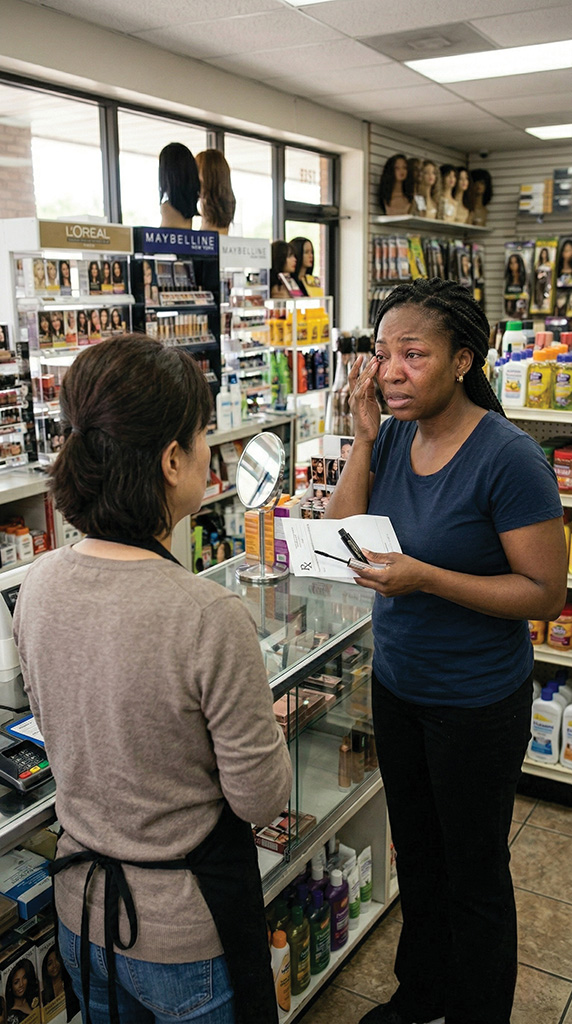
At a beauty supply store in Dallas, Texas, a regular customer walked in one afternoon with visibly irritated, bloodshot eyes. She explained that after using a mascara she had purchased two weeks earlier, her eyelids became swollen and intensely itchy, eventually requiring a visit to the hospital.
“Shouldn’t I at least get a refund? And what about my medical expenses?”
The store owner, Mr. Lee, was caught off guard. He had only sold the product and had never considered that it could lead to this kind of issue. From the store’s perspective, he assumed a refund would resolve the situation. But is that really enough?
Under MoCRA standards, this situation may go beyond routine customer service. Depending on the severity of the symptoms and subsequent developments, it could qualify as a “Serious Adverse Event (SAE)” as defined by the FDA. If that happens, a 15-day reporting countdown begins for the retailer.
1. What is an SAE? — A Definition Every Retailer Must Understand
A “Serious Adverse Event” under MoCRA includes any of the following:
- Death
- A life threatening condition
- Hospitalization or extended hospitalization
- Persistent or significant disability or impairment
- Congenital anomaly or birth defect
- Other serious medical events requiring medical intervention
| ⚠ Common points of confusion for retailers |
| Even mild skin reactions such as redness or itching can be classified as an SAE if they lead to hospitalization or medical treatment. |
| Simple dissatisfaction, such as disliking a fragrance, does not qualify as an SAE. |
| If a customer mentions visiting a hospital, always confirm whether hospitalization occurred and what treatment was provided. |
2. The 15 Day Crisis Timeline — Step by Step Response
From the moment an SAE is suspected, the case must be reported to the FDA within 15 days. This timeline should be clearly posted and understood in store.
| Day 0 | Receive customer report | Record symptoms in detail, including timing, product, and reaction |
| Day 1~2 | Assess severity | Hospitalization, permanent damage, death, or life threatening condition triggers reporting obligation |
| Day 3~5 | Notify manufacturer or supplier | Provide product and lot number in writing and request a response |
| Day 6~10 | Prepare FDA MedWatch report | Complete Form FDA 3500A or use the online MedWatch system |
| Day 15 | Submit FDA report | Must be submitted within 15 days of the SAE. Late submission may result in penalties |
| Day 16~ | Maintain internal records (3 years) | All records must be retained for at least three years |
3. FDA Reporting Form — What to Include and How
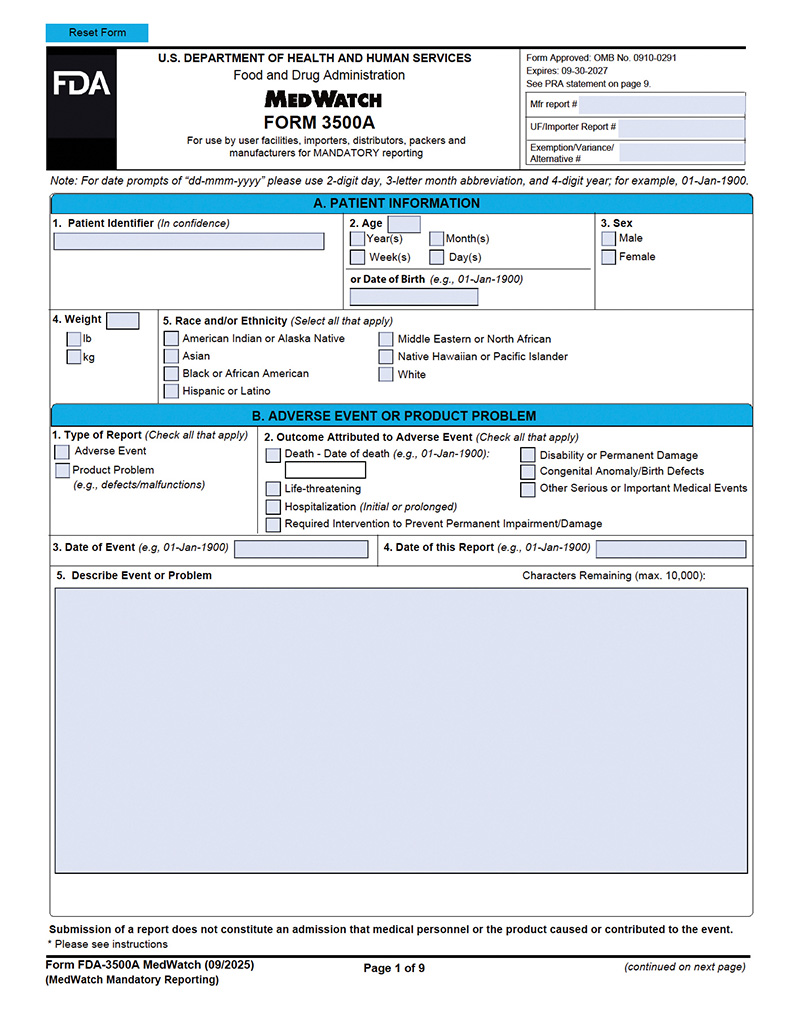
The required form is MedWatch Form FDA 3500A. Retailers should complete the following sections as accurately as possible.
 Key Sections for Retailers
Section A — Adverse event details: symptoms, onset, duration, outcome (including hospitalization)
Section B — Product information: product name, manufacturer, lot number, purchase date, usage
Section C — User information: age and gender (name not required, anonymity allowed)
Section G — Reporter information: store name, address, and contact details
▶ Click Image to download the Form
▶ Online submission: https://www.fda.gov/safety/medwatch/how-report
▶ After submission, retain the confirmation Case Number provided by the FDA
If a retailer fails to report within the 15-day deadline or knowingly omits an SAE, the FDA may impose serious enforcement actions, including:
- Issuing a Warning Letter
- Ordering a product recall
- Placing an Import Alert
- Conducting an on site inspection and enforcing corrective actions
4. Customer Response Scripts for Store Staff
Having a prepared script helps staff respond calmly and consistently when customers report adverse reactions.
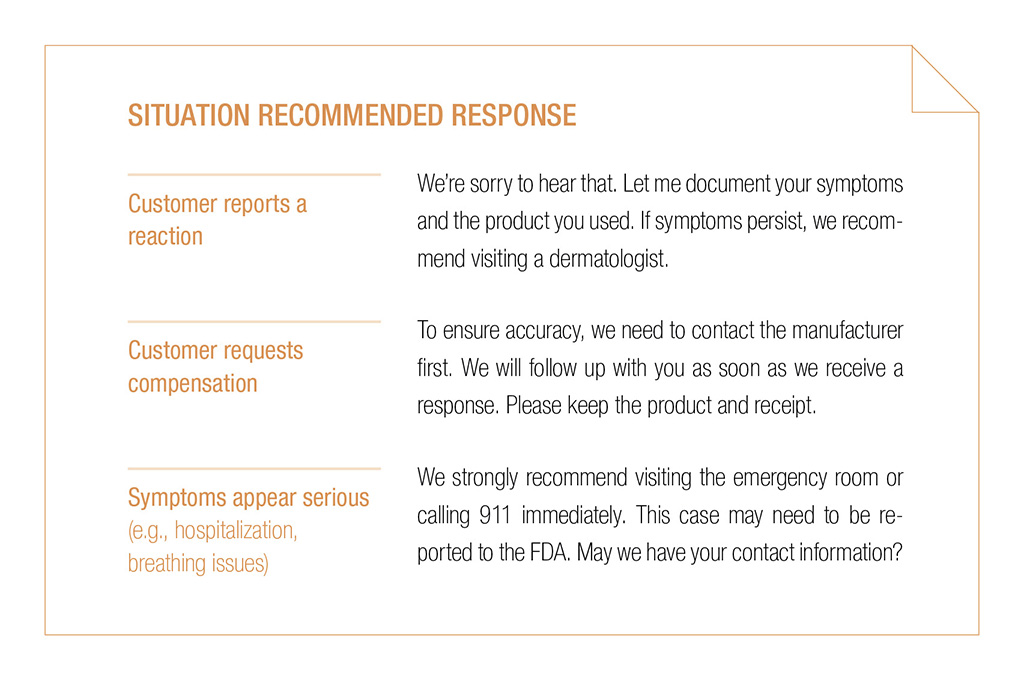
This script should be printed and placed at the counter for staff training. Statements such as “This is the manufacturer’s fault” or “We are not responsible” can be disadvantageous in legal disputes. Always respond based on documented facts.
Adverse Event Log Template for In Store Use
All reported cases should be recorded immediately and retained for at least three years. Maintaining either digital or printed records in store is recommended.
※ Retention requirement: minimum of three years from the date of record. For serious cases, supporting documents such as photos and medical records should also be retained.
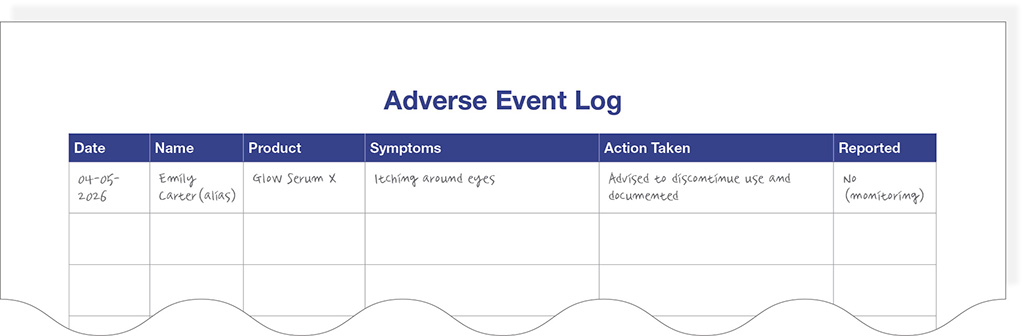
Click the image to download the form.
5. Liability Protection — Documents to Request from Manufacturers
When an adverse event is reported, retailers should formally request the following documents from the manufacturer or importer. These materials help clarify liability and demonstrate that the retailer followed standard distribution practices.
| Five key documents to request immediately |
| ① Certificate of Analysis (COA) for the specific lot |
| ② FDA facility registration confirmation (including FEI number), verified through fda.gov |
| ③ Full ingredient list (INCI names) and allergen disclosure |
| ④ History of adverse event reports for the same lot, if available |
| ⑤ Confirmation of any recalls or market withdrawal |
▶ Requests must be made in writing, such as via email. Verbal requests have no legal standing
▶ If the manufacturer refuses or delays providing documents, document that fact as well
Returning to Mr. Lee in Dallas, the situation fortunately did not escalate to hospitalization, and the issue did not develop into a larger dispute. However, if the customer had delayed treatment and her condition worsened to the point of hospitalization, Mr. Lee would have been legally obligated to report the case to the FDA within the 15 day window.
MoCRA defines retailers not simply as sellers, but as partners in consumer safety. This also means that only those who understand the standards can maintain control in these situations. A well prepared store can respond to adverse events based on clear guidelines rather than emotion, avoiding unnecessary compensation or false claims. If you have read this far, take one simple step today. Print out an adverse event log sheet and keep it in your counter drawer. That single sheet can become the foundation of your response.