
Five Winning Moves Walmart Is Using to Compete in the Online Era

© burdun – stock.adobe.com

Five Winning Moves Walmart Is Using
to Compete in the Online Era

For more than 20 years, Walmart stood as the world’s largest company and a defining force in retail. In 2025, however, it slipped to No. 2 as Amazon took the top spot. For beauty supply store owners, that shift may feel familiar enough to prompt the thought, “That was inevitable.” But judging the future of retail by rankings alone misses a great deal. Walmart is continuing to deliver results by changing how it operates, while also preparing for what comes next. Looking at Walmart’s example offers a useful way to understand how retail has adapted to the online era, how it has responded, and how its core strengths are still being turned into profit. There are meaningful clues here for anyone trying to set a direction for the future.


Walmart vs. Amazon
© synder.com

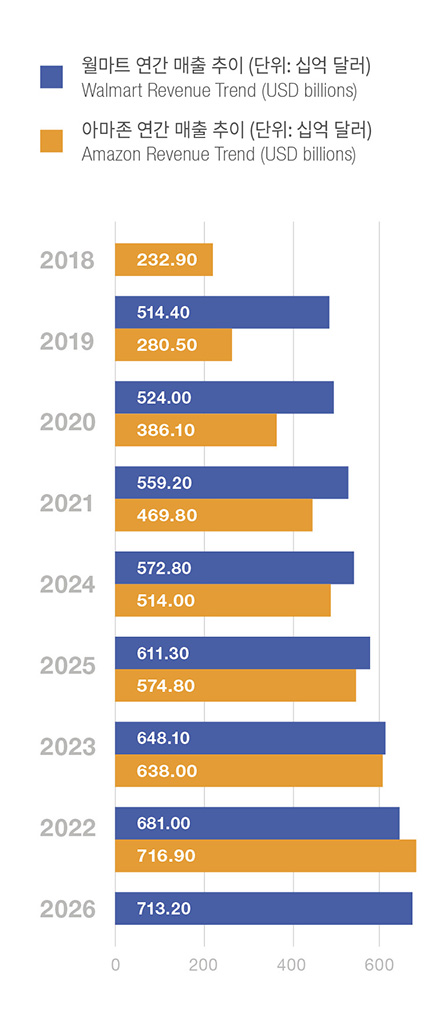
Amazon is built on a mix of businesses including product sales, advertising, subscriptions, and cloud services. Walmart, by contrast, still depends overwhelmingly on store based revenue. With that in mind, many still argue that Walmart remains a dominant force when retail is viewed in its purest sense. Earlier this year, Walmart also reported about $713.2 billion in revenue for fiscal 2026, which covers February 2025 through January 2026, setting a new all time record. It was the first time in history that a retail company recorded annual revenue of more than $700 billion.

 Another point worth noting is Walmart’s operating direction. In the past, it focused primarily on expanding revenue. Now, it has shifted its attention toward margin structure. Even as it strengthens e commerce, Walmart has preserved the advantages of its offline stores and improved efficiency within that model. As a result, it is now seen as falling somewhere between Target and Costco.
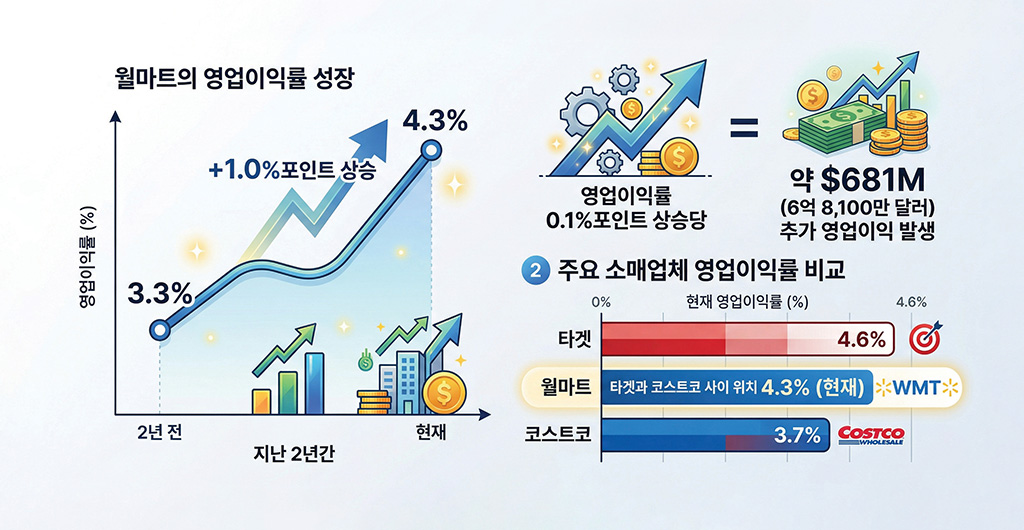


• Over the past two years, Walmart has increased its operating margin from 3.3 percent to 4.3 percent. Every 0.1 percentage point increase in operating margin translates into about $681 million in additional operating profit.
• Walmart’s current operating margin of 4.3 percent places it between Target at 4.6 percent and Costco at 3.7 percent.


Why Walmart’s Choices Make Sense:
What Beauty Supply Stores Can Learn

Last March, Harvard Business Review published an interview with Walmart CEO Doug McMillon. He started at Walmart as a part time employee in 1984 and became CEO in 2014, making him a symbolic leader who has witnessed the company’s transformation firsthand. In the interview, he speaks in concrete terms about how Walmart built its digital business during the rapid rise of e commerce, and how it has navigated tariffs, wage pressure, and supply chain strategy.
Competitive prices and stores that save customers time still win

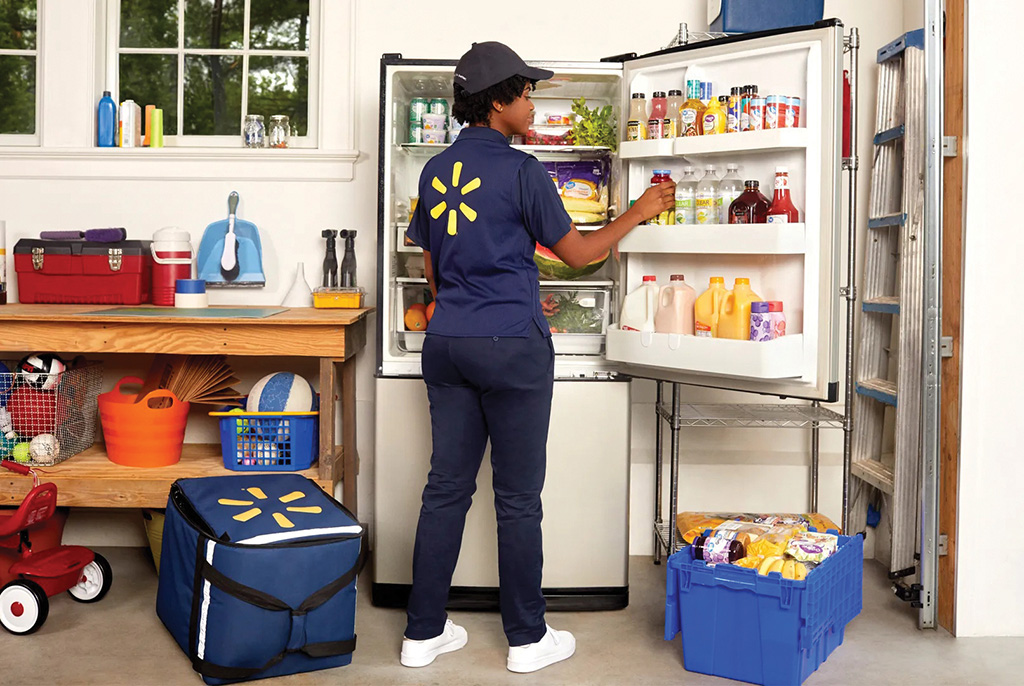
©theverge.com Walmart’s InHome service. For just an additional $7 a month or $40 a year on top of a Walmart membership, customers can have groceries delivered all the way to their refrigerator, with no separate tip required.

 Walmart’s slogan is “Save Money. Live Better.” McMillon explains that the meaning of this phrase has expanded over time. “Save Money” remains important, but it is no longer enough on its own. Helping customers save time, offering greater convenience in local communities, and creating a healthier shopping environment all now fall under the broader meaning of “Live Better.”


For beauty supply stores

Structurally, online shopping often has the advantage on price. But shipping costs, delivery time, and the fact that customers cannot physically inspect products before receiving them remain clear limitations. At the same time, those limitations are exactly where physical stores have a real edge. Competitiveness depends on how well that advantage is used. The store should be easy to find, products should be easy to browse, and the decision making process should feel less confusing. Above all, it should be a place customers want to return to.

Make operating decisions faster. A monthly check in is too late.

Another point McMillon emphasizes is speed in operations. He said Walmart’s entire operating rhythm changed during the pandemic. Decisions that once moved on a weekly or monthly cycle shifted to a daily or weekly one. The team reviewed what decisions had to be made each day and acted even without having every answer. What mattered was not a perfect solution, but faster judgment, faster execution, and giving more authority to the front line.

For beauty supply stores

In a market that changes this quickly, reviewing and deciding only once a month is no longer enough. You need to track more frequently which products are suddenly moving, which styles customers keep mentioning, and which displays are getting a strong response. It has also become far more important to build an operating structure where decisions can be discussed, made, and reflected quickly together, rather than having one person hold all decision making power.

It chose investment over immediate profit

About a decade ago, Walmart made bold investments in employee wages and benefits. It also committed large scale funding to e commerce and technology modernization. That created short term pressure on profitability. In fact, when margins visibly declined, some even raised concerns about a crisis. But Walmart did not treat those costs as losses. It saw them as part of a structural shift for the future. Rather than passing those costs on to customers, it shared the burden with shareholders.

For beauty supply stores

This is a familiar but difficult issue for many retail owners. You want to improve the store, but investment always comes with pressure. Staff training, display upgrades, POS improvements, digital ordering systems, online channel management, and store environment updates all look like immediate costs. But when those changes keep getting delayed, the store’s competitiveness is usually what weakens first.

Buying is not about price alone. It is the sum of many judgments.

 McMillon stresses that retail success depends heavily on deciding quantities and managing the flow of goods. Too much inventory creates extra cost and discount pressure. Too little means missed sales opportunities.
He gave seasonal merchandise as an example. Even when deciding in spring how many Halloween costumes to buy, Walmart considers several factors at once, including the possibility of tariff changes, the actual landed cost at the time inventory arrives, how demand might shift if prices rise, and whether alternative suppliers are available. Consumer spending patterns also matter. In inflationary periods, household priorities change. Spending on children and pets often comes first, while adults tend to delay purchases for themselves. Drawing on those patterns, Walmart may take a stronger position on children’s costumes while staying more conservative on adult versions. In the end, buying is not driven by one standard. It is a process of weighing multiple variables together.

For beauty supply stores

Looking only at wholesale cost and retail price is not enough when placing orders. You also need to understand how customers respond when prices go up, whether similar substitutes are available, how seasonal goods will be cleared if timing slips, and which items customers always buy versus which ones they postpone. As uncertainty grows around factors like tariffs and war, it becomes more effective to consider multiple scenarios at once and narrow the range of choices with care.

Walmart does not view AI as a tool for cutting. It sees AI as a tool for growth.

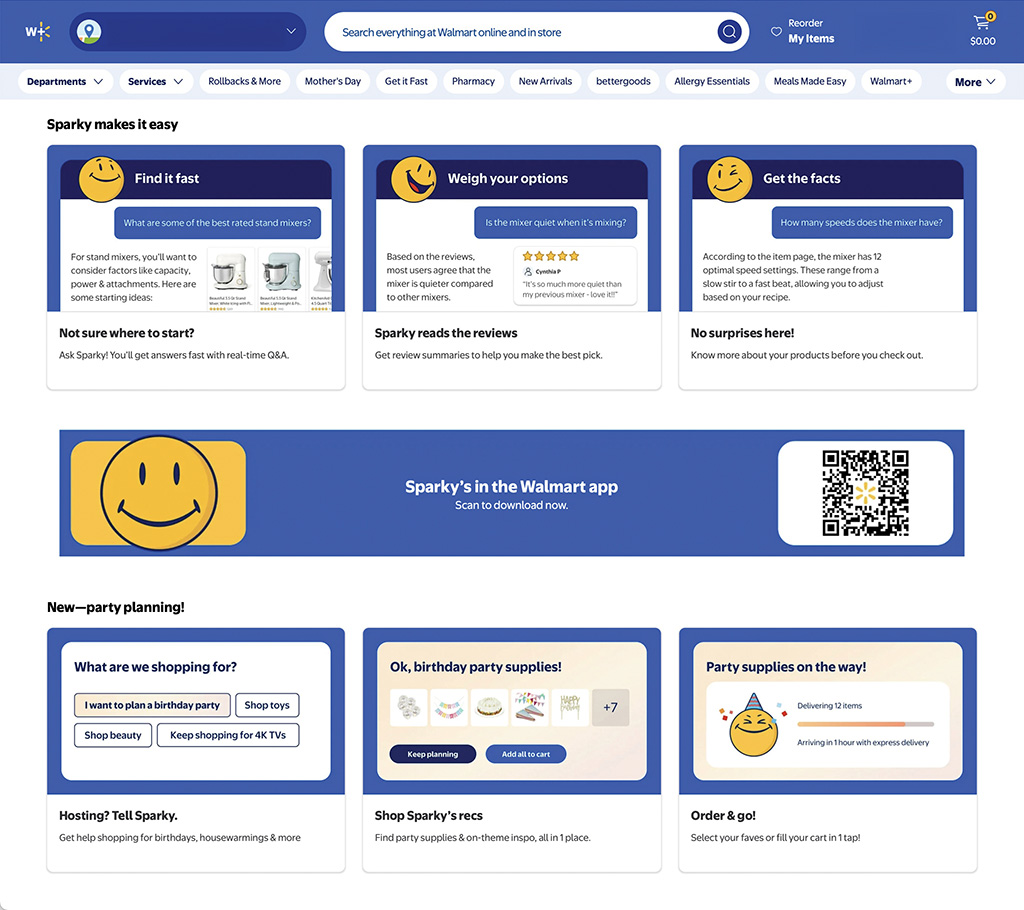
©cross-border-magazine.com Walmart has also launched Sparky, a shopping assistant powered by generative AI.

 Walmart’s stance on AI also stands out. Many companies first approach AI through the lens of operating cost reduction or workforce cuts. McMillon, however, says the first word that comes to mind is “growth.” He believes AI can create shopping experiences that are more personalized, more finely tailored, and more convenient. The key is that Walmart sees AI as a growth tool that can improve customer experience and drive revenue.

For beauty supply stores

This can begin with simple uses such as responding to customer questions more quickly, organizing product descriptions more clearly, creating staff training materials, and refining social media copy. Even simplifying repetitive operational documents can be a strong start. The focus should be on using AI to make your store faster, more accurate, and more helpful.

BUSINESS BY HEEJIN SONG

BNB Magazine MAY 2026 ©bnbmag.com