A 300% Sales Jump with Trend-Driven Bundle Strategies in Beauty Supply Stores

Saturday is typically the busiest day of the week. The hair section is crowded with shoppers, and a long line forms at the checkout counter. On the surface, the store appears to be doing very well. Yet when it is time for the end-of-month accounting, many store owners find themselves asking the same question: “We had plenty of customers, so why is the money left in the bank account about the same as last year?” In this issue, we outline a five-step strategy that beauty supply store owners can apply immediately, using trends to turn customer traffic into reliable cash flow.

1. Use Inventory Proactively Before the Golden Window Passes

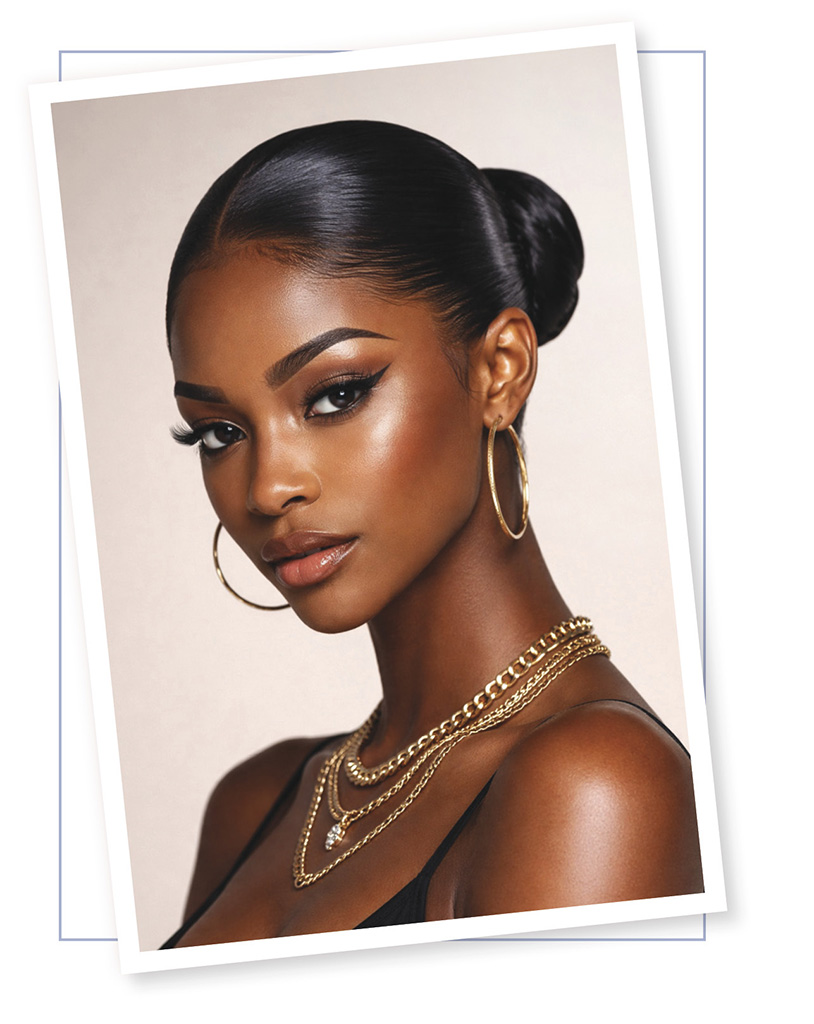
In the market, a trend is not simply something “young people like.” For store owners, a trend should be viewed as a shopping list that customers will soon bring with them. For example, if a well-known Black actress appears at the BET Awards or the Grammy Awards wearing a sleek bun, it often means that within a week many customers will walk into the store with that image saved on their phones.

While trends spread quickly on social media, there is usually a golden window of about 7 to 14 days before the trend fully translates into in-store purchases. Ordering new products and waiting for them to arrive may take too long. Instead, store owners need the agility to identify essential items already in stock and move them to prominent displays right away.

2. A Six-Dollar Increase Through Bundles Can Create a Major Gap

Retail ultimately comes down to numbers. Even simple arithmetic shows the power of bundle selling. Suppose a store with an average transaction value of $21 receives 100 customers a day. That results in daily sales of $2,100. If bundle strategies increase the average purchase to $27, daily sales rise to $2,700. That is a $600 difference per day.

Over 25 business days in a month, that gap becomes $15,000. The number of customers has not changed. The store simply sold items together as a bundle. Without additional promotions or new product purchases, understanding trends and using existing inventory to add just one or two more items per customer can increase monthly revenue by $15,000. Over a year, that translates to approximately $180,000 in additional sales.

Category Standard Store (Single Items) Strategic Store (Bundles) Difference
Daily Customers 100 100
Average Ticket $21 $27 +$6
Daily Sales $2,100 $2,700 +$600
Monthly Sales (25 days) $52,500 $67,500 +$15,000

3. Generate Repeat Sales with a ‘Blonde Care’ Maintenance Set

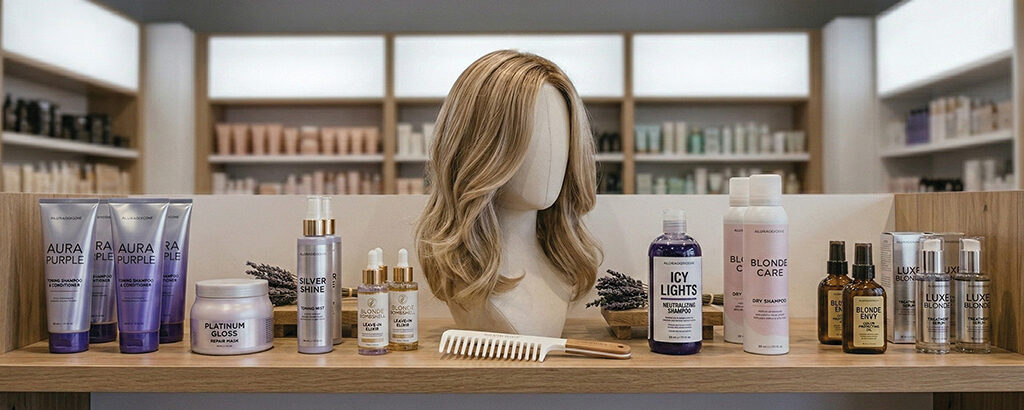
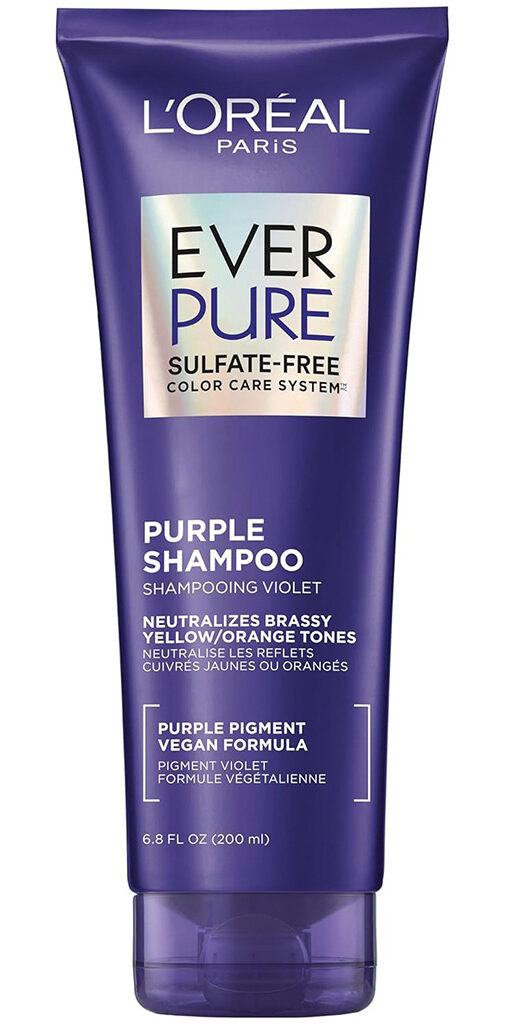
Selling high-priced wigs or bundle hair is not the end of the transaction but the beginning. Trend that require careful maintenance, such as blonde hair, offer one of the best opportunities for repeat sales. Blonde hair can quickly experience discoloration and damage over time. At this point, store owners should guide customers with a logical suggestion: “To keep this premium hair looking its best, a purple shampoo and leave-in conditioner are essential.”

Hair products themselves may last a long time, but maintenance products are often used up within a month. Selling these care products together creates a reason for customers to return to the store the following month. When presented as a bundle with names such as “Blonde Care Kit” or “Blonde Maintenance Set,” customers are more likely to see it as a complete solution.

Another effective strategy is to place purple shampoo and care products right next to blonde bundle hair displays. Light shades such as blonde, ash, or silver tend to develop yellow tones over time due to sunlight, minerals in water, and heat styling. Purple shampoo works through color theory to neutralize those yellow tones. The violet pigments counteract brassiness, helping the color remain clean and balanced. For blonde, bleached, or gray hair, using it once or twice a week can help maintain the tone longer.

4. “May I help you?” Can Be a Sales-Killing Question

The first sentence a staff member says to a customer can significantly influence sales. Asking “May I help you?” often leads to the response, “I’m just looking.” Instead, try asking open-ended questions such as:

“What style are you planning today?”
“Are you looking for something for a special occasion?”
“How long are you planning to keep your current hairstyle?”

Questions like these naturally open the door to cross-selling and product recommendations.


5. Create a Trend Zone in the Store

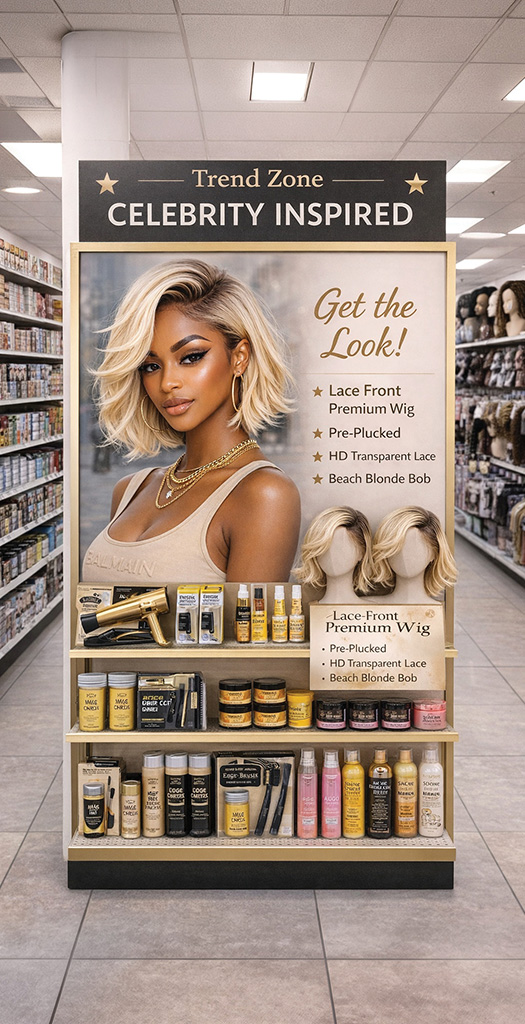
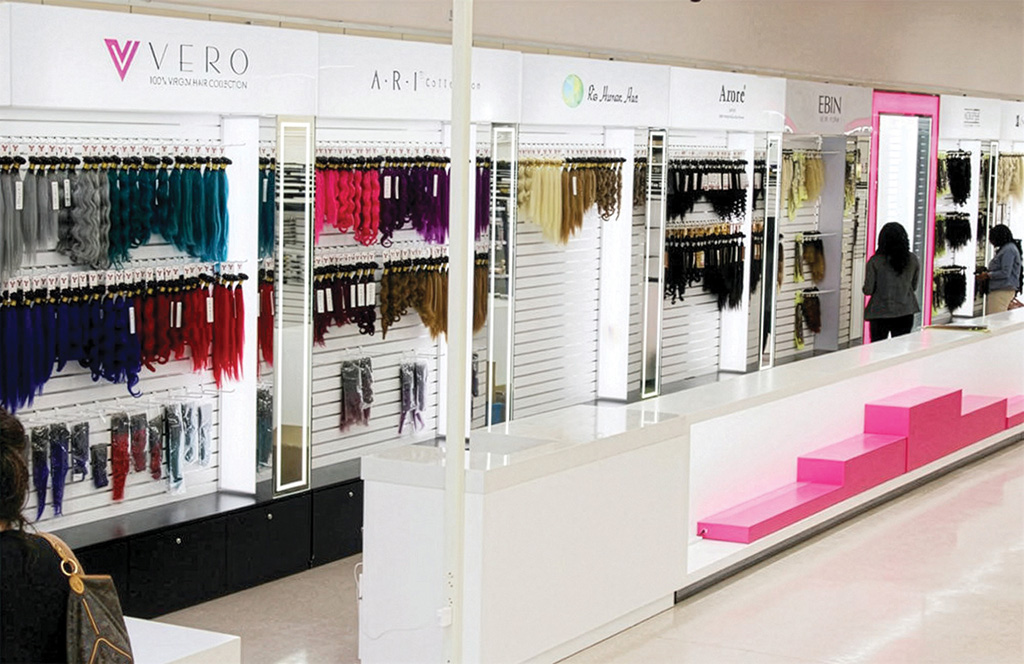
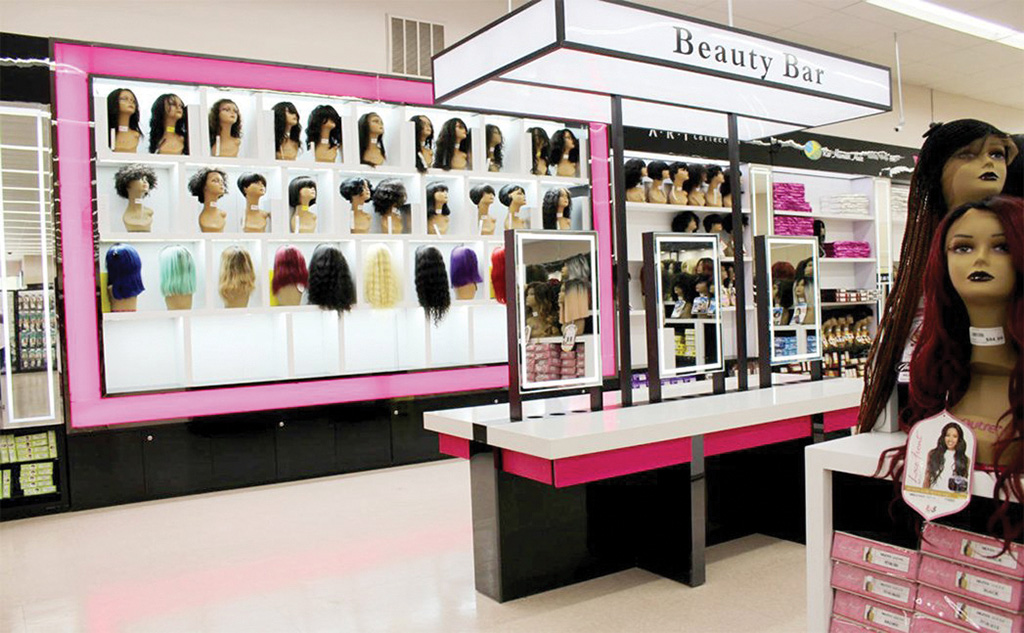
Industry observations suggest that even a small 4- to 6-foot section in a beauty supply store can influence both sales and brand recognition. Some stores have recently started setting up dedicated trend zones to capture customer attention.

The approach is simple. Display photos of popular styles and place the products needed to achieve those styles directly below the images. An industry insider explained that the key is showing the inspiration and the products together rather than separately.

For younger shoppers, a well-designed corner can also become a natural photo spot. When customers take pictures there and share them on Instagram or TikTok, the store gains exposure without additional advertising costs. One store owner shared that friends of customers actually visited the store after seeing those posts. An industry source noted, “Even if someone has 10,000 followers, it means little if they never visit the store. A trend zone is designed to turn online attention into in-store traffic.”
 

매장내 작은공간을 활용한 ‘트렌드 존’의 예
고객들이 매장내에서 사진을 찍어 자신의 SNS에 올릴 수 있도록 만들어 놓은 트렌드 존. 설치 비용에 비해 놀라운 홍보 효과를 기대할 수 있다.
Example of a Trend Zone Using a Small Area in the Store

A trend zone designed so customers can take photos and share them on social media. Compared to the relatively low installation cost, the potential promotional impact can be surprisingly significant.

TREND By JOO PARK
BNB Magazine APRIL 2026 ©bnbmag.com