© burdun – stock.adobe.com
Five Winning Moves Walmart Is Using
to Compete in the Online Era
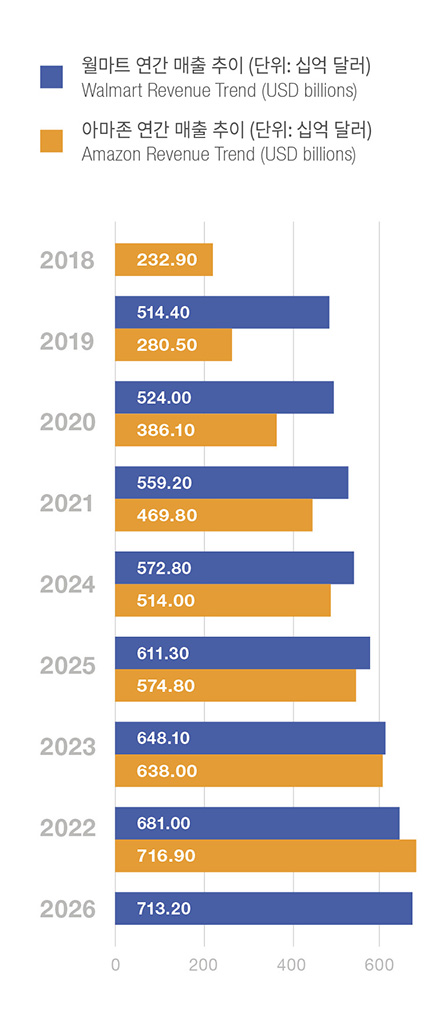
For more than 20 years, Walmart stood as the world’s largest company and a defining force in retail. In 2025, however, it slipped to No. 2 as Amazon took the top spot. For beauty supply store owners, that shift may feel familiar enough to prompt the thought, “That was inevitable.” But judging the future of retail by rankings alone misses a great deal. Walmart is continuing to deliver results by changing how it operates, while also preparing for what comes next. Looking at Walmart’s example offers a useful way to understand how retail has adapted to the online era, how it has responded, and how its core strengths are still being turned into profit. There are meaningful clues here for anyone trying to set a direction for the future.
Walmart vs. Amazon
© synder.com
Amazon is built on a mix of businesses including product sales, advertising, subscriptions, and cloud services. Walmart, by contrast, still depends overwhelmingly on store based revenue. With that in mind, many still argue that Walmart remains a dominant force when retail is viewed in its purest sense. Earlier this year, Walmart also reported about $713.2 billion in revenue for fiscal 2026, which covers February 2025 through January 2026, setting a new all time record. It was the first time in history that a retail company recorded annual revenue of more than $700 billion.
Another point worth noting is Walmart’s operating direction. In the past, it focused primarily on expanding revenue. Now, it has shifted its attention toward margin structure. Even as it strengthens e commerce, Walmart has preserved the advantages of its offline stores and improved efficiency within that model. As a result, it is now seen as falling somewhere between Target and Costco.
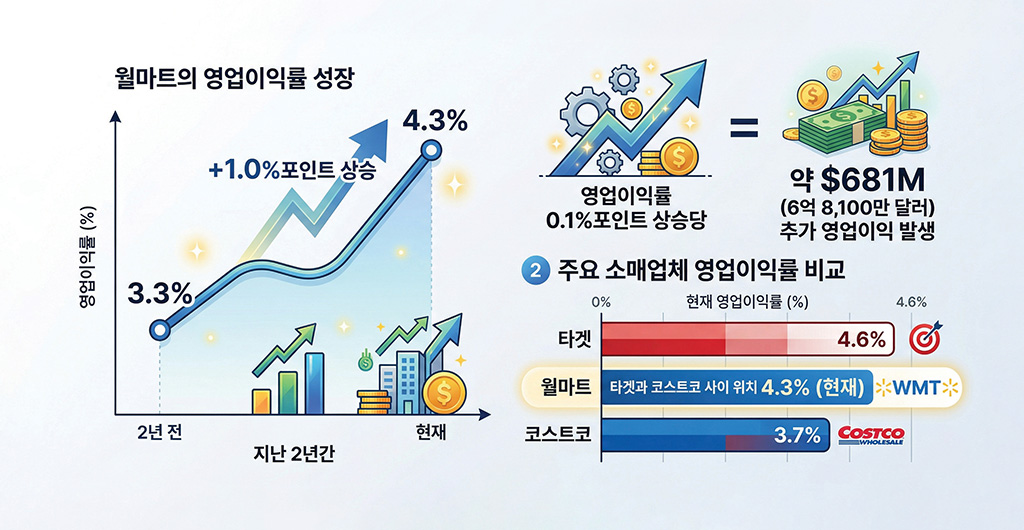 • Over the past two years, Walmart has increased its operating margin from 3.3 percent to 4.3 percent. Every 0.1 percentage point increase in operating margin translates into about $681 million in additional operating profit.
• Walmart’s current operating margin of 4.3 percent places it between Target at 4.6 percent and Costco at 3.7 percent.
Why Walmart’s Choices Make Sense:
What Beauty Supply Stores Can Learn
Last March, Harvard Business Review published an interview with Walmart CEO Doug McMillon. He started at Walmart as a part time employee in 1984 and became CEO in 2014, making him a symbolic leader who has witnessed the company’s transformation firsthand. In the interview, he speaks in concrete terms about how Walmart built its digital business during the rapid rise of e commerce, and how it has navigated tariffs, wage pressure, and supply chain strategy.