Wig or High-Tech Device?
The Amazing Science of Wigs
Wigs are a familiar, everyday item in beauty supply stores, yet their role extends far beyond aesthetics—into medical settings, film and performance industries, and everyday life for individuals experiencing hair loss or physical change.
To meet these expanding demands, the wig industry is pushing its technological boundaries, integrating advances in textile engineering, medical science, and more recently, artificial intelligence (AI).
This article looks beyond wigs as beauty products to explore the technologies reshaping the category and the possibilities ahead.
1. “Scalp Protection Just by Wearing”: Micro-capsule Lace?
‘Micro-encapsulation,’ a technology often used in high-performance sportswear, involves coating fibers with microscopic capsules containing Vitamin E, Aloe Vera, or Argan Oil. As the wearer moves, body heat and friction cause these capsules to burst, releasing their contents to soothe the skin in real-time.
-
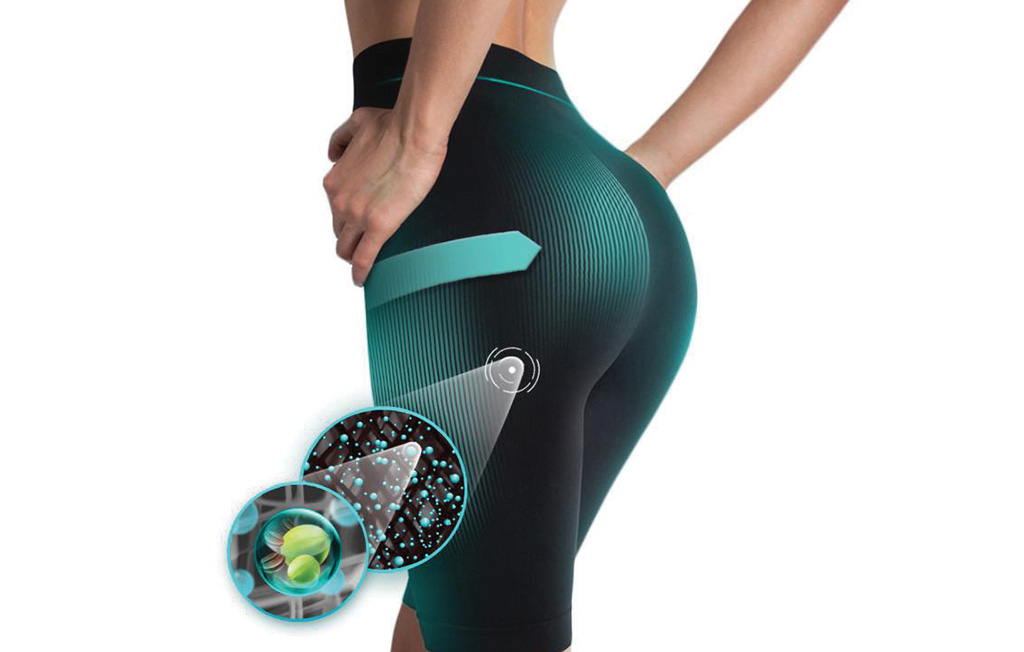
- Sportswear incorporating cosmetotextiles soothes skin in direct contact with the fabric.
-
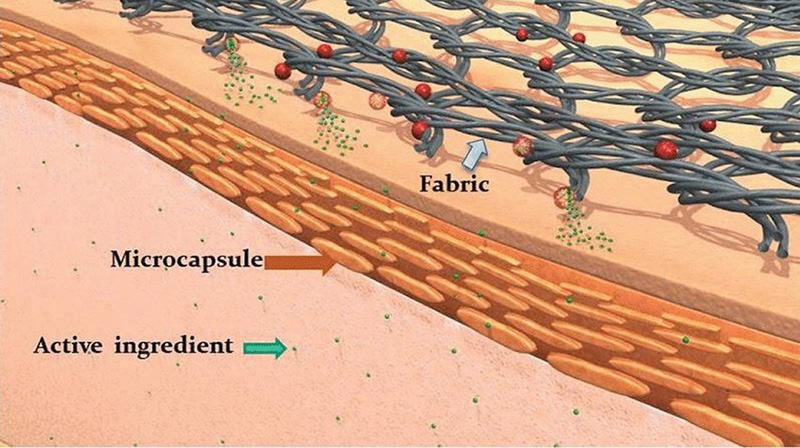
- ©ResearchGate, How cosmetotextiles work.
Currently, products featuring wig fibers infused with ingredients such as Aloe Vera are already in the hair market. Research is currently underway on methods to integrate cosmetotextile technology into the ‘lace’ that directly contacts the skin. If successful, we may soon see wigs equipped with lace that significantly reduces skin irritation.
2. The ‘Breathable Wig Cap’ Combating Bacteria and Sweat
In summer, the internal temperature of a wig can be near 104°F, creating a breeding ground for sweat and bacteria that causes itching. To solve the issue, the latest technology is evolving into an integrated approach involving engineered cap designs and special materials.
Structurally, techniques like ‘Laser-cut Ventilation,’ which creates thousands of microscopic holes for immediate heat release, and the use of high-elasticity Power Mesh to enlarge mesh openings while minimizing hair snagging, are currently under practical research.
Simultaneously, material engineering is exploring the bonding of antibacterial silver nano or copper ions to fibers to prevent microbial growth, as well as the application of Phase Change Materials (PCM)—used in space suits to absorb or release heat—to maintain a comfortable internal environment.
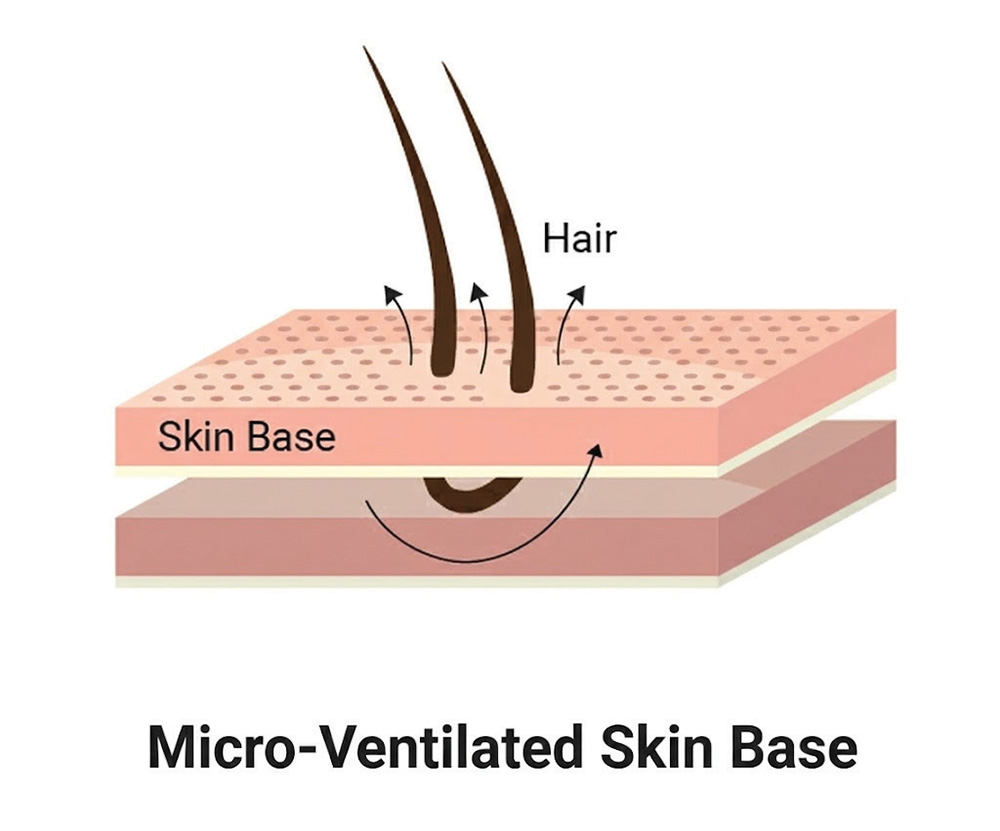
-

- PCM fibers maintain comfort by absorbing or releasing heat depending on conditions.
3. The Tesla of the Wig Industry: AI and 3D Scanning ‘Parfait’
The U.S. startup ‘Parfait’ is being hailed as the ‘Tesla’ of the industry for providing custom wig services utilizing Artificial Intelligence (AI). When a user scans their face and head with a smartphone, AI analyzes data points to calculate the exact head size.



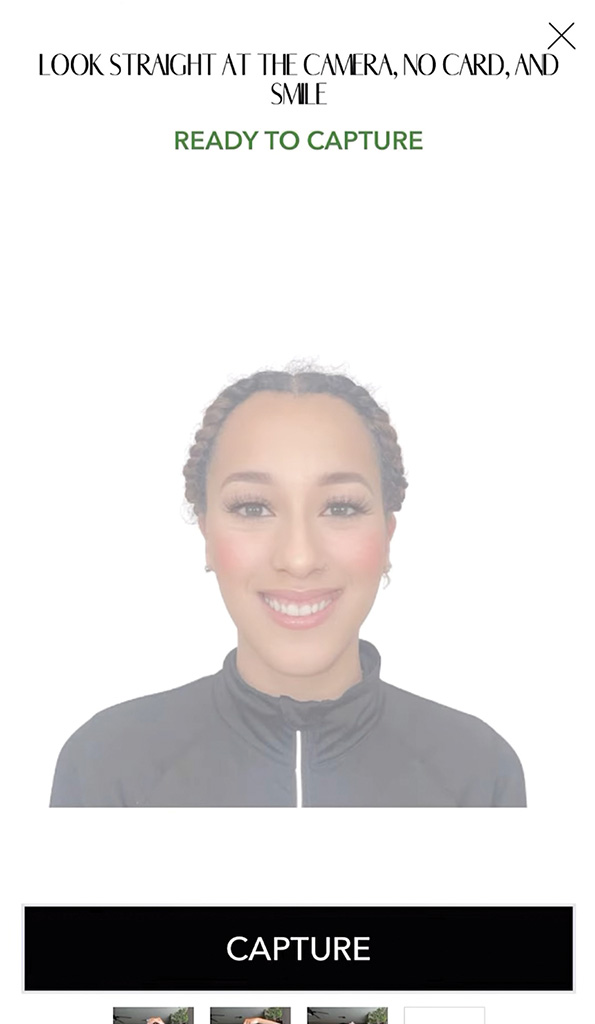

©Parfait, Data points from facial captures are analyzed to calculate the buyer’s head size.
This scientifically resolves the chronic complaint that “wigs are too tight and painful.” Having attracted significant investment, this technology distributes pressure evenly to aid blood circulation and prevents traction alopecia caused by excessive tightness. In the future, purchasing a wig may become as personalized as buying prescription glasses.
4. Rich Volume, Lighter Weight: Increasingly Delicate Knotting
Aderans, a renowned Japanese wig company, recently introduced a new knotting technology called ‘Nemo-Fuwa Knots (Japan Patent No. 7422908).’ This technique lifts hair from the root, securing both breathability and a voluminous look.
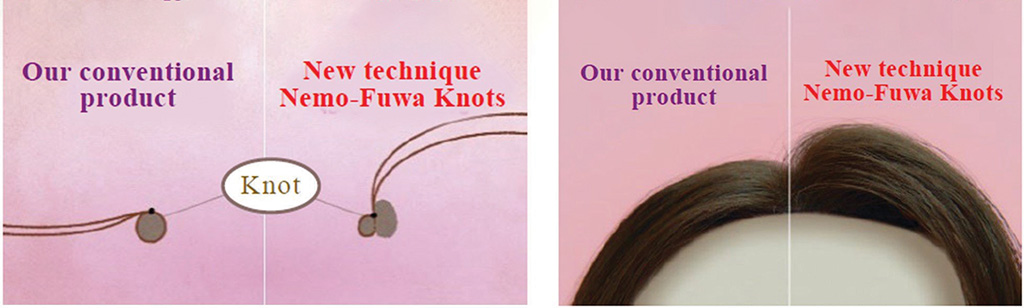
©Aderans, Nemo-Fuwa Knots technique and the structure of products utilizing it.
Unlike traditional dense knotting methods, it achieves significant volume with a smaller amount of fiber, drastically reducing the wig’s overall weight while adding natural dimension to the part or crown. This technology promises high satisfaction, particularly for middle-aged customers who are sensitive to weight but desire natural volume.
5. Evolution of Men’s and Medical Wigs: From Artificial Skin to Bio Skin
Among the wig market’s most high-standard consumer groups are men experiencing hair loss and patients who have lost hair during medical treatment. The current benchmark for high-end wigs contacting the scalp is ‘Thin Skin,’ an ultra-thin polyurethane (PU) base just 0.03mm to 0.08mm thick. This transparent membrane perfectly mimics human scalp tone and texture, acting like a ‘second skin’ when adhered, though issues regarding sweat drainage and breathability remain.
-
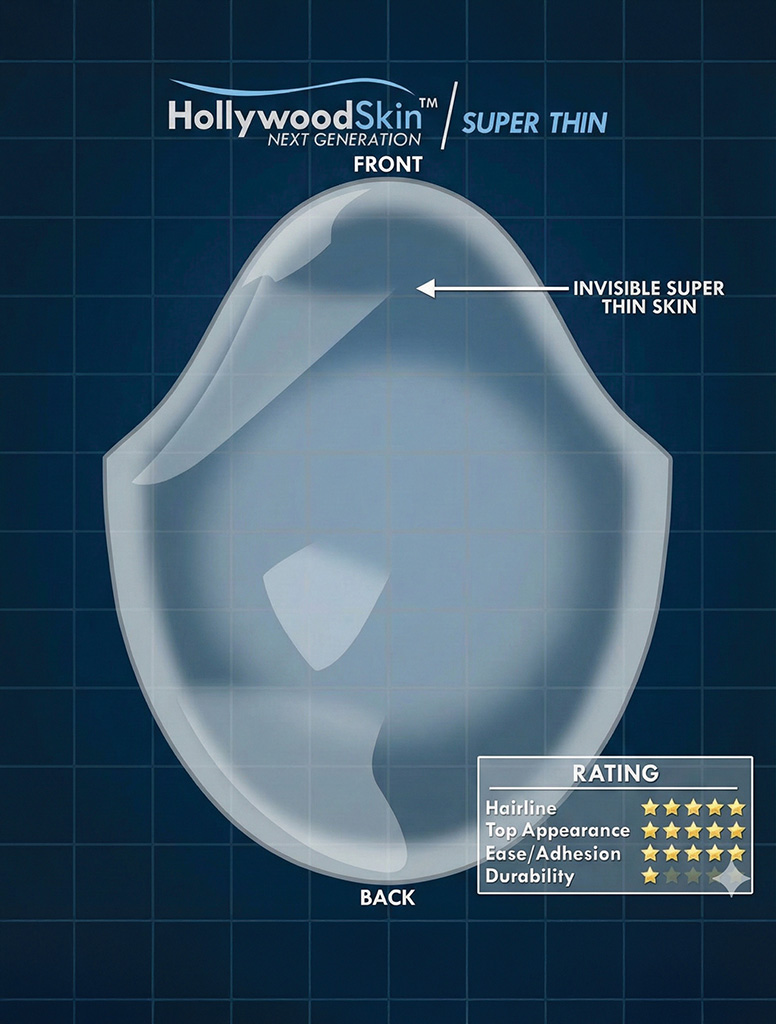
- ©HollywoodSkin, A custom toupee order with an ultra-thin 0.01mm skin base is available.
-
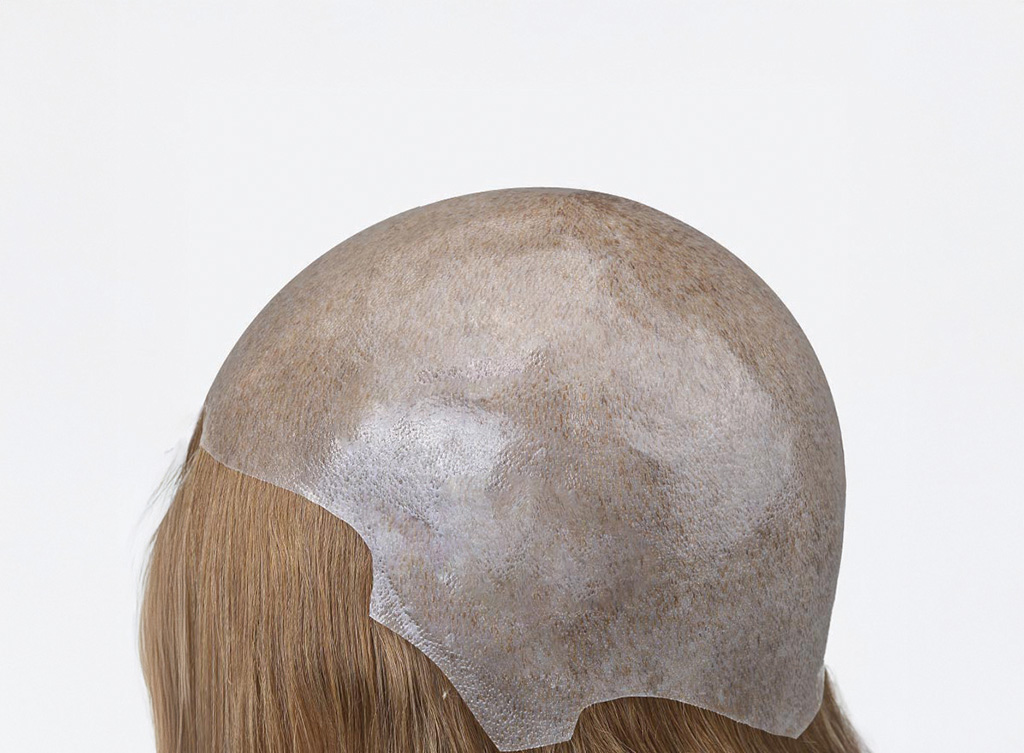
- ©Bono, A wig and its thin skin interior.
To address these drawbacks, next-generation bio-coating technology is under development. Coating the inner PU base with Hydrogel—a polymer network capable of holding large amounts of water—can provide a ‘cooling effect’ by absorbing heat and sweat. Additionally, Bio-peptides, known for wound healing and skin regeneration, can mitigate minor friction wounds or scalp troubles caused by wearing and removing wigs, offering comfort to sensitive patients and long-term users.