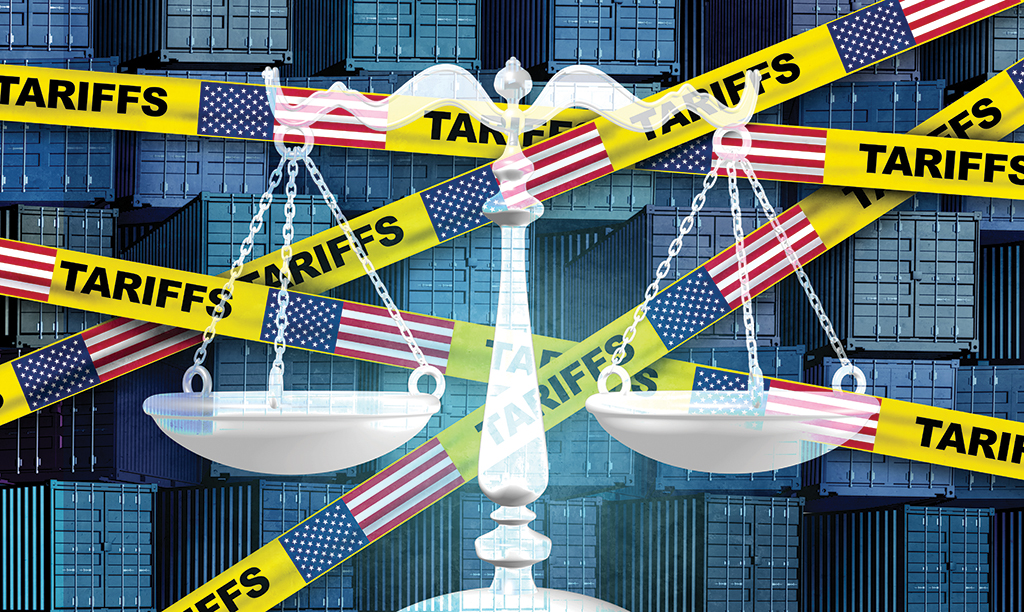
Trump’s Tariff Policy Awaits Supreme Court Judgment
On November 5, the U.S. Supreme Court began hearings on the constitutionality of the Trump administration’s tariff measures. Two lower courts had found the measures unlawful, but differing interpretations among the Supreme Court justices leave the outcome uncertain.
Core Legal Dispute: The International Emergency Economic Powers Act (IEEPA)
Enacted in 1977, this U.S. federal law grants the president authority to control foreign economic transactions and asset movements during a declared “national emergency.” in other words, it permits restrictions or freezes on trade and financial activities without congressional approval when “national security” is at risk.
Issue 1. Is a trade deficit a “national emergency”?
• President Trump declared a national emergency citing trade deficits and drug inflows, but some justices questioned whether long-term trade deficits or social issues qualify as emergencies.
• The coalition of importers argued that the IEEPA was intended for temporary action in response to security crises or economic attacks, not as a tool for trade negotiation or political leverage.
• The Trump administration countered that “the trade deficit poses a serious threat to national security and employment,” asserting that economic imbalance itself can constitute an emergency. It emphasized administrative urgency, stating, “If the president cannot act immediately, there is no reason for an emergency law to exist.”
Issue 2. Does the IEEPA extend to tariffs?
• The justices first asked, “Since a tariff is essentially a tax, should it not fall under congressional authority under the Constitution?”
• The Trump administration argued that the IEEPA explicitly grants the president authority “to restrict or regulate imports,” making tariffs a lawful measure within that scope.
• The importer coalition countered that the law contains no reference to tariffs and challenged the administration’s broad interpretation of presidential authority.
Questions Following the Supreme Court Ruling
If the Court rules the tariffs unlawful, it could lead to large-scale compensation claims and complex refund procedures. If upheld, it would set a precedent enabling future presidents to impose tariffs under the pretext of a national emergency.
Before the hearing, a White House spokesperson mentioned a “Plan B,” indicating that other legal provisions could justify tariffs. Experts note that such measures would be less immediate and limited than those under the IEEPA, but the administration’s stance underscores its continued commitment to aggressive tariff policy and protectionism. Global trade tensions, particularly between the United States and China, are unlikely to ease soon.
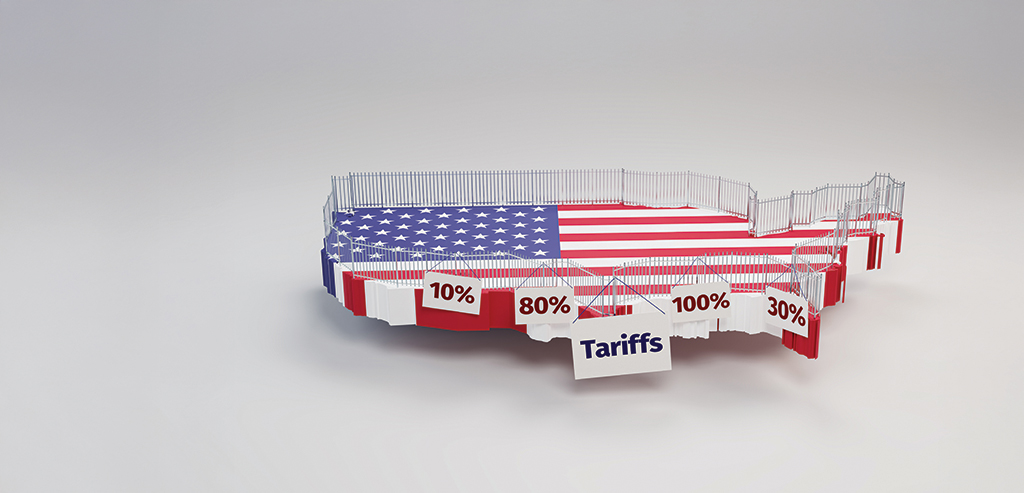
Timeline of U.S. Tariff Actions in 2025 (as of November 7)
February 1
Announced a 25% tariff on Canada and Mexico citing illegal immigration and fentanyl issues, introduced new tariff measures against China
(implementation deferred 30 days for Canada and Mexico, effective February 4 for China).
April 2
Declared “Liberation Day,” applying a 10% base tariff on all imports and 34% on Chinese goods.
April 4
China imposed a 34% retaliatory tariff on U.S. goods.
April 9
Raised tariffs on Chinese imports to 84% → prompting China to match.
13 hours later, adjusted to 125%, with fentanyl-related tariffs bringing the total to 145%.
(Non-Chinese imports granted a 90-day grace period.)
April 14
U.S. small and mid-sized firms filed a trade court lawsuit claiming “abuse of authority.”
May 12
Reached first U.S.–China trade agreement in Geneva.
U.S. reducing tariffs 145% → 30%, China reducing tariffs 125% → 10%. (90-day grace period)
May 28
Trade court ruled for small and mid-sized firms → appeals court suspended enforcement.
July 31
35% tariff on Canadian goods effective August 1 (USMCA-compliant products remain exempt).
August 29
The appeals court upheld the ruling invalidating the tariffs.
September 3
The Trump administration appealed to the Supreme Court.
September 9
The Supreme Court accepted the case and scheduled expedited hearings for November.
October 26
Ontario faced controversy over an “anti-tariff ad.” Trump announced but did not implement a 10% tariff.
October 30
Trump and Xi reached a temporary truce in Gyeongju.
China suspended rare earth export controls for one year.
U.S. lowered tariffs on Chinese goods → average of 47%.
November 5
The Supreme Court held hearings on the tariff case.